
Slideshow

GANGLAND NEWS

GANGLAND SLAYINGS

September 09, 2011

GANGWAR in central Dublin exploded into violence as two separate gang feuds ignited


streets of north inner city Dublin are among the most heavily policed areas of the country because of the bitter feud that has claimed five lives. But the gang war -- sparked when paedophile gangster Christy Griffin was charged with raping his girlfriend's daughter -- is not the only feud which has blighted the area. Another north inner city war has been raging since 2006, resulting in two murders. Like the Christy Griffin feud, the separate Summerhill feud is deeply entrenched, motivated by astonishing levels of hatred and revenge. The last murder linked to either feud was in June, when Michael Taylor (53) was shot six times in the head and chest with a handgun as he stood outside a caravan in a park in scenic Donabate, north Co Dublin. Taylor was not known to gardai for involvement in organised crime but was involved in feud-related incidents over five years. The first murder linked to the Summerhill feud happened in 2007, but full details of it can't be disclosed here for legal reasons. Taylor was closely associated with a man who was questioned about that murder on the northside. The feud began when two criminals in their 20s from the north inner city were involved in a bitter row over a woman in late 2006. Family members on both sides then got involved. Cars and motorbikes belonging to one side were damaged in a vandalism incident which directly led to an associate of Michael Taylor being stabbed three times while he walked in the north inner city with a small child. He received only minor injuries -- but less than a week later the suspected knifeman was shot dead in revenge. A month later a hand grenade was thrown at the home of a family associated with Michael Taylor in Summerhill. Miraculously, none of the 10 occupants was injured in the attack, which came a night after the two rival groups clashed in the Mater Hospital as one family visited a relative. In that incident, a woman was stabbed in the hand while a man suffered head wounds. Abused In another, one of the main protagonists was found with a knuckle-duster in his back pocket after being searched by gardai. He claimed he had the weapon for his own protection. Then, in December 2007, a female associate of the first murder victim was caught with a loaded pistol as she drove through the north inner city. The woman, in her 30s, was given a three-year suspended sentence after Dublin Circuit Criminal Court heard she got the gun after her associate was shot dead and there were serious threats against her life. There can be no doubt about the vicious nature of the 'Summerhill feud'. But it is the gang war that started after mob boss Christy Griffin was arrested and charged with raping a young girl that has made most of the headlines. Griffin was convicted and sentenced to life in prison in April 2007. At that stage, once-loyal comrades had turned on each other. Two tense trials followed during which gardai were forced to set up an armed checkpoint outside the victim's family home. This brave woman, who gave crucial evidence, had been regularly sexually abused by Griffin from the age of eight to 16. While this reign of sexual terror was going on, Griffin became one of Ireland's most prolific armed robbers, a senior member of a gang of over 30 men and women who made a fortune robbing from cargo containers in Dublin's docklands and from drug dealing. Everything changed when Griffin (42) was charged with the sex offences in 2004. In a further blow for the gangster, his brother 'Collie' was shot dead in a botched post office robbery in Lusk, Co Dublin. When the jury failed to reach a verdict at his first trial at the Central Criminal Court, in May 2006, there were violent scenes outside the Four Courts when associates of Griffin clashed with family friends of the rape victim in front of frightened onlookers. Throughout that summer, tensions mounted in the north city, and it wouldn't be long before the dispute erupted into all-out war. Gerard 'Batt' Byrne (26), a key ally of the rape victim's family, became the first fatality when he was gunned down in Dublin's IFSC on December 13, 2006. A fortnight later, small-time crook Stephen Ledden (28) was coldly executed in a revenge attack as he slept on a couch. By this time, Griffin had moved from his north inner city base to Swords, where he survived separate grenade and gun attacks. These were followed by revenge attacks on the rival faction. Handing him a life sentence,for his litany of crimes, Judge Paul Carney, who was placed under armed garda protection for the trial, delivered a scathing judgment, describing Griffin's previous record as "horrendous". But the life sentence did not end the feuding. With both sides having links to other crime gangs across the country, including all of Dublin's crime syndicates and Limerick's deadly McCarthy/Dundon crew, the factions had the firepower and muscle to continue the violence. Paranoid The Griffin-backed mobsters were determined to avenge the death of Stephen Ledden, killed in a case of mistaken identity. They got their chance in July 2010, when Ledden's killer, Stephen 'Madser' Byrne (32) was gunned down in broad daylight at the junction of Sheriff Street and St Laurence's Place East. Byrne, from Mariner's Port, Sheriff Street, knew his life was in grave danger after he'd shot Ledden dead, instead of targeting another man. After his murder, Madser's dad Noel explained the paranoid life his son had been leading. "He couldn't go outside the door. Anytime he wanted to go out he asked me to go with him. He phoned me on the night be died and I said no. I said I wasn't able to go out because I was not well and that we would go out some other night. So he went out on his own and this is what happened. He was a prisoner in his own home," he recalled. "I knew he was going to get one man, or one man was going to get him. I knew it was going to happen. The police had told him there was a contract on his head and he knew who was going to do it." By the time of his murder, 'Madser' had built up 30 criminal convictions, including a 12-year sentence for a string of armed robberies. Byrne was one of three first cousins murdered in the bloody feud. 'Batt' Byrne was shot dead in 2006 and Aiden Byrne (32) was shot dead in February 2010. Separately, Madser's brother, David (26), died in July 2009, after being hit over the head with a sock filled with batteries in Mountjoy prison. His body was then desecrated by criminals who broke into an inner city funeral home and wrote 'Rats' across his forehead. The murder of Stephen 'Madser' Byrne was the last killing linked to the Christy Griffin feud. Sources believe that a reason for this is massive garda raids in November 2010 that targeted members of the faction opposed to the rapist Griffin's mob. Only a month before the raids, Gary O'Reilly (34), a nephew of Griffin, was lucky to escape with his life when he was shot in the arm and leg in an attack at his home in Swords.Within an hour of the O'Reilly attack, a man from the opposing faction was given a severe hiding by a gang of men in the north inner city after dropping his children at school. Weeks later, in an unprecedented show of force, on the morning of November 8 last, over 300 gardai met at Garda Headquarters, Phoenix Park and in Wexford and Cork stations from 4am before raiding over 30 locations in a co-ordinated pre-dawn operation. They searched 33 addresses in Dublin, Cavan, Wexford, Cork and Kildare. Some 13 people, including all of the key targets, were arrested -- nine of them in Dublin, and two in both Cork and Wexford. Detectives seized a small quantity of cocaine and confiscated mobile phones, computers and bulletproof vests. Records linked to property investments were also taken from the offices of solicitors and accountants by members of the Criminal Assets Bureau. The last major shooting incident linked to the feud happened on January 25 when shots were fired at the home of slain hitman Stephen 'Madser' Byrne. The garda response to this incident was prompt and less than 24 hours later. "Gardai have well and truly got to the grips with the situation," said a source.
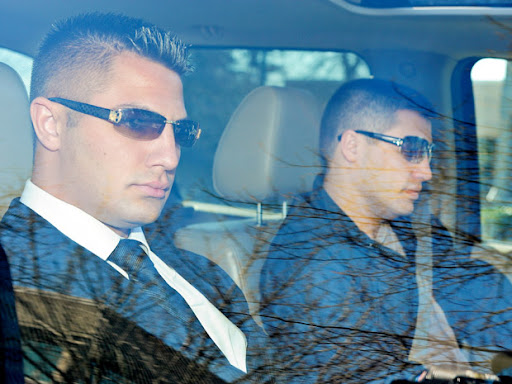
Australian slain mobster Carl Williams 'was informant'


Notorious Australian gangster Carl Williams was offering information to the police in the weeks before he was beaten to death in his jail cell, the trial of his alleged killer has heard. A lawyer who handled Williams' talks with the police said the gangster was preparing to provide the names of some of his underworld associates. The lawyer said Williams had become worried about his safety in prison. His former cellmate Matthew Charles Johnson, 38, denies murder. Johnson has admitted killing Williams, but said it was self-defence, adding that he was in a "kill or be killed situation". At the time, police feared the killing could spark another gangland war in Melbourne's criminal underworld. Williams was already serving a 35-year jail term for murdering three of his rivals when he was killed in April 2010. On the third day of Johnson's murder trial, Williams' former lawyer told the court that the gangster had been ready to tell police the names of other people involved in those murders. Shane Tyrrell said Williams had hoped to get his sentence reduced, as well as having his daughter's school fees paid, in return for the information. However, Mr Tyrrell said his client had become uneasy because prison staff had known about his talks with the police. On Wednesday, Williams' father George had told the jury that Johnson had killed his son because he wanted to benefit from the police deal. George Williams, himself a convicted drug trafficker, said Johnson had asked his son: "Can you get me on board?" Williams was one of Australia's most infamous gangland bosses before he was jailed. His life of crime and the gangland warfare it engendered in Melbourne was the inspiration for the TV series Underbelly.

September 08, 2011

London riots: Family of Mark Duggan speak out


Dad-of-four Mr Duggan, 29, was shot dead near Tottenham Hale Tube station on August 4, sparking protests and then riots which spread across England. His brother Shaun Hall said Mr Duggan “was wrongfully taken from us.” Mr Hall, 42, said he was “not confident at all” the investigation by the Independent Police Complaints Commission will solve the case. Little evidence has been offered by members of the community, he said. “What we need is for people to come forward and tell it like they saw it, basically. We need them to come and say what they saw. “If they’ve got video footage on their phone we need to see that – we need to put this picture together. “I think I speak for the whole family when I say that’s not happening, it hasn’t been happening and it has to change,” Mr Hall told BBC. Mr Hall has also told the Guardian that police were responsible for the three nights of rioting which followed his brother’s death. “If they hadn’t shot and killed Mark there would have been no riots. “The police were clearly operating a shoot-to-kill policy that day. They are supposed to disable not kill suspects.” Mother Pam Duggan, 53, said she has questions about the police force’s version of events about her son’s death. “I just want the police to admit that they killed my son. Why didn’t the police shoot him in the foot instead of in the chest?” Meanwhile, the Met Police has refuted claims by the Times today (Thursday). The national newspaper claims the officer who shot dead Mr Duggan is poised to return to firearms duties. This has been denied by the Met. “The Times report and subsequent media reporting following the story that the MPS are ready to reinstate the officer are wrong,” a spokesman said.

Monterrey gangsters display brutality for all to see


gangsters in this city seem to fear no one, especially not the police. They steal and kill in broad daylight, and some of their actions are designed to instill terror. One day in late August, two vehicles pulled in front of the Suspiros Pastry Shop along busy Constitution Avenue, one of the city's most heavily traveled roads. An elderly unarmed guard at the shop, driven by curiosity, then fear, watched through a window as armed men got out of the vehicles, leading an apparent hostage who had a steel chain around his neck like a noose. The gangsters led their victim to a pedestrian overpass, pulling him up the stairs by the chain. At the top, the guard related, one gangster took out a large ice pick. "He plunged the ice pick in the man's chest," the guard said, asking that his name not be used for fear that gangsters might come after him, too. As the victim fought for his life, the assailants tied the chain to a bridge railing and tossed the man over, where he dangled, bleeding but still alive, above traffic on a service road. The gangsters hung a banner, then descended to street level, where they fired their AK-47 assault weapons a few times in the air. "Then they fired into the man's hanging body," the witness said. Terrified motorists passing along Constitution Avenue and witnessing the scene kept on driving. Time of attack: 11:50 a.m. on Aug. 23. "This is the third guy they've hung from a bridge in Monterrey," said Tatiana Clouthier, a former mayoral candidate and civic activist. Police arrived too slowly to confront the gunmen or make arrests. The proximity of police to many crime scenes, including the Aug. 25 firebombing of a casino that left 52 people dead, has only reinforced suspicions among Monterrey residents that police are colluding with gangsters. A state police officer is in jail, accused of serving as a lookout for the gangsters who carried out the casino firebombing, and prosecutors say they believe other police were involved. Criminal infiltration of police in Nuevo Leon state is not new. In 2009, the state's top public security official told U.S. diplomats that he believed 50 percent of state and municipal police had been bought off by drug cartels. The U.S. account of the conversation is among the 251,287 diplomatic cables made public by WikiLeaks. The concern about police, Clouthier said, is that "they either are in collusion or they are incompetent. Whichever possibility is tragic."

Bacon slaying revenge inevitable,


Police are on high alert after receiving intelligence about possible retaliation for the August execution in Kelowna of Red Scorpion gangster Jonathan Bacon and the wounding of others with gang associations. Supt. Tom McCluskie, who heads the Gang Task Force, said Wednesday that tensions between rival gangs have increased exponentially since the Aug. 14 slaying of Bacon and shooting of full-patch Hells Angel Larry Amero and Independent Soldier James Riach. The niece of the Haney Hells Angel president was paralyzed in the attack by masked gunmen. McCluskie said it is "no longer a question of if retaliation will occur, but when." He said law enforcement agencies in the Okanagan and across the Lower Mainland are working together to head off further violence. A special meeting to discuss the tensions was held Tuesday between the Gang Task Force, which is part of the Combined Forces Special Enforcement Unit, Surrey RCMP and municipal officers from Vancouver, Abbotsford and Delta. A dedicated team of 65 officers will be working around the clock to prevent more violence, McCluskie said. "We simply said this is the situation, and this is the help we are looking for, and everybody is willing to pitch in," he said. McCluskie said the unease exists between the Hells Angels and their associated gangs, including the Independent Soldiers, and the United Nations on the other side, as well as the Duhre brothers of Abbotsford and allies of the late Gurmit Singh Dhak, who was gunned down at Metrotown mall last October. "As these groups all try to determine who's responsible for the shooting in Kelowna, all these conspiracies and theories are born, and as a result, tension is building," McCluskie said. "What happened in Kelowna can clearly happen again at any time in any place. A lot of these guys are opportunist. They have got people out hunting all the time - looking for rival gang members. And given the tension right now, that is something we want to get in front of . There are people obviously angry and looking for revenge." McCluskie said his officers have issued several "duties to warn" in recent weeks, where police are obliged to tell a gangster or associate about threats that might exist to harm them. None of those who survived the August shooting are cooperating with police, McCluskie said. No one has yet been arrested for the daytime ambush outside a posh lakeside hotel. "Our primary objective is, and always has been, the safety of the general public. The wanton and callous disregard for the safety of innocent bystanders was clearly demonstrated during the Kelowna incident and we as the police, must do everything we can to prevent further acts of violence and retaliation," McCluskie said. "We are not slowing down and these gang members have to know that the streets of B.C. are not theirs and our officers will make that message very, very clear to them."

September 07, 2011

Gardai search for links in Traveller murders


Gardai are trying to establish if there is a link between the murder of a man at a halting site in Dublin at the weekend and the shooting of another Traveller in the area last July. Detectives are trying to find a motive for the killing of Tom McDonagh (49), who was shot repeatedly at his home at St Margaret's site in Ballymun on the northside of the city. They suspect that a Finglas-based gang is responsible for the murder. Last night, officers were examining possible links between the incident on Saturday night and an ambush at the River Road in Finglas on July 15 last year when Anthony "Mole" McDonagh narrowly escaped death after he stopped his white Ford van at what he thought were county council roadworks. He was hit in the chest, stomach and side but survived the attack. The latest victim was alone when two men burst into his home and fired a barrage of shots from an automatic pistol. Mr McDonagh was dead on admission to hospital. Gardai are now following a number of lines of inquiry as they examine CCTV footage and trawl through statements from other residents of the halting site. The dead man was not a big criminal player. However, detectives are trying to establish whether his death was a result of his links to a group involved in feuding 

Russian Crime Gang Leader Gets Life In Jail


A court in Moscow has sentenced the leader of a notorious Russian organized crime gang to life in prison for involvement in at least 20 killings. The Moscow City Court judge said Tuesday that Sergei Butorin posed a grave danger to society and should be incarcerated for the rest of his life. ITAR-Tass news agency quoted the judge as ruling Butorin had been behind 20 murders and nine attempted killings. Butorin headed the Orekhovskaya gang, an organized criminal group that reached the height of its powers in Moscow in the 1990s. He was arrested by Spanish authorities in 2001 on charges of trading in illegal weapons and extradited to Russia last year. Russian criminal groups flourished in the chaotic years that followed the fall of the Soviet Union in 1991.

Joshua Leo Johnson, vice-president of the Sonoma County Hells Angels, surrendered to Lake County authorities


Joshua Leo Johnson, vice-president of the Sonoma County Hells Angels, surrendered to Lake County authorities in connection with the beating of a rival gang member and a companion at Konocti Vista Casino in June, according to the Lake County Sheriff's Office. Johnson, 35, an iron worker, remains in jail pending a hearing on his $500,000 bail, officials said Tuesday. Two other Hells Angels — Nicolas Felipe Carillo, 32, and Timothy Robert Bianchi, 33 — were arrested during a warrant sweep in Santa Rosa and Petaluma last week, authorities said. A fourth suspect, David Dabbs 32, remains at large. Dabbs also is being sought on a San Diego no-bail warrant for alleging kidnap and torture, according to the Lake County Sheriff's Office. The suspects are charged in the vicious beating of Michael Burns, 39, a rival motorcycle gang member, and Kristopher Perkin, 48, during a tattoo convention at the casino. Perkin was not seriously injured.

key witness in a case against a Hell's Angels member accused on drug and gun charges is missing


key witness in a case against a Hell's Angels member accused on drug and gun charges is missing along with two other men, raising the suspicions of relatives and authorities in a western Massachusetts town. Police say 44-year-old David Glasser, 58-year-old Edward Frampton and 47-year-old Robert Chadwell, haven't made any banking or credit card transactions and haven't been in contact with family members since they vanished more than a week ago. The men shared an apartment in Pittsfield. "Three people, all in the same house, missing — yeah, something happened, something tragic," Les Chadwell, brother of Robert Chadwell, told The Berkshire Eagle newspaper. "We'll never hear from them again, and you can quote me on that." Glasser was expected to testify this month in the robbery, assault and kidnapping trial of Adam Lee Hall, the reputed sergeant at arms of the Berkshire County chapter of the Hells Angels. Hall has pleaded not guilty in Berkshire Superior Court to a host of charges including kidnapping, assault, witness intimidation, extortion, cocaine distribution and weapons crimes. He had been free on bail but was arrested Sunday on extortion and child pornography charges alleging he got someone to text him inappropriate photos of a 16-year-old girl. Hall was arraigned on the new charges Tuesday in the Berkshire court. A judge ordered him held on $1 million bail, and his case resumes Oct. 3. He still is scheduled to go on trial on the other charges Sept. 19. Authorities said the criminal cases against Hall stems from a dispute he had with Glasser. They said Hall believed Glasser stole an automobile part from him in 2009, so he retaliated by threatening Glasser, beating him with a baseball bat and forcing Glasser to turn over his car to him. Hall later tried to frame Glasser, hoping it would stop Glasser from testifying against him about those allegations, authorities said. They said Hall got a woman he knows to falsely accuse Glasser of robbing her at gunpoint. Glasser was cleared of any wrongdoing. William Rota, Hall's attorney, said his client denies all the allegations and looks forward to his trial. He said he doesn't know what to make of Glasser and his two roommates all missing at the same time. "I would not be surprised with the authorities to suspect (Hall's involvement), but I have no reason to suspect that it's true," he said. Pittsfield police Capt. Patrick Barry said the men have been missing since the night of Aug. 27 or early the following morning — the weekend that Tropical Storm Irene hit New England. They were last seen at their apartment, he said. Barry and Berkshire District Attorney David Capeless would not comment on any possible ties between Hall and the disappearance of the men, but they said they can't rule out foul play. "It's now well past a week, and other information we have indicates that this was not just a matter of them leaving for parts unknown," Capeless told The Associated Press on Tuesday. He declined to elaborate.

September 06, 2011

Gang member sentenced to death in murder-for-hire scheme


gang member recruited in a murder-for-hire conspiracy was sentenced to death Thursday for killing a man who was set to inherit a family-run business in Rancho Dominguez, according to the Orange County district attorney’s office. Armando Macias, 35, of Lancaster was found guilty by a jury in April of one felony count of special circumstances murder with an allegation of murder for financial gain in the slaying of 44-year-old David Montemayor, the prosecutor's office said. Macias, who is the fifth defendant to be sentenced in connection with Montemayor’s murder since 2006, was also found guilty of kidnapping to commit robbery, possession of a firearm by a felon, street terrorism, attempted murder and two counts of conspiracy to commit murder, officials said. Macias, who has a prior strike conviction for voluntary manslaughter in 1993, also was slapped with several sentencing enhancements in connection with Montemayor’s murder. Prosecutors allege that in 2002, Montemayor’s sister Deborah Perna, 54, of Anaheim and her co-worker Edelmira Corona, 34, of Pico Rivera solicited the help of 44-year-old gang member Anthony Navarro of Canyon Country to kill Montemayor. Perna was jealous that her father intended to pass control of the family company to her brother, who she believed was stealing from the business, prosecutors said. Navarro recruited gang members Gerardo Lopez, 26, of Pacoima, Alberto Martinez, 33, of Castaic, and Macias in a kidnap-and-murder-for-hire scheme, prosecutors said. On Oct. 2, 2002, the men kidnapped Montemayor, a father of three, at the family business in Rancho Dominguez and headed to the victim’s home in Buena Park, where they were told he kept thousands of dollars in cash, prosecutors said. On the way, Montemayor, who only had one arm, managed to escape the car. But Macias shot him in the head as he fled, prosecutors said. Lopez also fired at Montemayor before the gang members raced off in their car, triggering a police car chase, authorities said. Police eventually stopped the vehicle and arrested Macias, Lopez and Martinez. Both Navarro and Martinez have been earlier sentenced to death for their role in Montemayor’s murder. Lopez, the other gang member, and Perna, the victim’s sister, were sentenced to life in prison without the possibility of parole, according to information from the district attorney's office. Corona, the co-worker, has pleaded guilty to manslaughter and is scheduled to be sentenced Oct. 18. She faces a maximum of 22 years in prison, officials said.

Texas Syndicate's Valley head gets 20 years; 5 fellow gang members also sentenced


Six members of the Texas Syndicate prison gang — including its Rio Grande Valley leader — were sentenced to serve time in federal prison for several charges including racketeering, kidnapping and drug charges. Chief U.S. District Judge Ricardo Hinojosa on Monday sentenced 40-year-old Jose Ismael Salas, the gang’s regional head, to 20 years in prison for drug and racketeering offenses, court records show. Salas originally pleaded guilty April 2, 2009, to two separate charges of possession with intent to distribute 6 kilograms of cocaine on Aug. 12, 2004, and a similar charge for 39 kilograms of marijuana on March 28, 2003. The charge alleged that the intent of the possession of the drugs was to further the goals of the criminal organization. Among the five other Texas Syndicate members who were sentenced was Fidel Valle, 45, who received a sentence of 10 years and six months in prison. Valle was described as the drug supplier for the organization. He entered a guilty plea July 28, 2009, to the charge of possession with intent to distribute 6 kilograms of cocaine. Court records show that Aug. 12, 2004, after speaking with Salas, Valle tried to sell the cocaine to other Texas Syndicate members but was stopped by authorities during a traffic stop. Also sentenced was Romeo Rosales, 41, who received 12 years and seven months in prison for the kidnapping of Amancio Pinales, who was abducted and eventually gunned down in Mexico on Aug. 12, 2004. Noel De Los Santos, 33, was sentenced to 20 years in prison in the March 20, 2003, murder of fellow gang member Crisantos Moran. According to information released by the U.S. Attorney’s Office, Moran had been ordered to kill a rival gang member from Peñitas, but after arriving there with De Los Santos and another member named Jose Armando Garcia, he failed to carry out the killing and was slain instead. Earlier this year, Garcia was given a life sentence. Two other Syndicate members were sentenced for a separate murder connected to the organization. Cristobal Hernandez, 31, and Arturo Rodriguez were sentenced to 10 and 20 years, respectively, for the murder of Marcelino Rodriguez in June 2007. The two men had aided a third man known as Raul Galindo, who shot Rodriguez in the back of the head. The two men then set the vehicle containing his body on fire. Rodriguez had been named in a sealed court document that had been provided to them by an employee at a law firm that was defending Rodriguez. The Texas Syndicate had sanctioned the death of Rodriguez.

Nine people stabbed to death, five killed in a deliberately set fire and an innocent grandmother’s body shoved in the trunk of her own car.


These troubling deaths are just a portion of Winnipeg’s climbing homicide cases this year. As of Thursday, Winnipeg has 29 homicides recorded, well above last year’s total of 22. Winnipeg’s deadliest year on record was 2004 when there was 34. “The numbers are a lot higher than we would like to see,” said Const. Jason Michalyshen, Winnipeg police spokesman. “It’s concerning to us, and it should be concerning to everyone.” The latest victim is Joseph Lalonde, 48, who was brutally beaten with a baseball bat. Two 15-year-old boys were charged with second-degree murder. A total of 10 youths have been charged in connection to the 2011 deaths. Michalyshen said it’s been a challenging year. “Our resources have been very busy making sure no stone is unturned, making sure that these investigations are investigated thoroughly, and arrests are made,” he said. Three cases are unsolved — Cara Lynn Hiebert, 31, was found dead in her home on Redwood Avenue on July 19; Baljinder Singh Sidhu, 27, was stabbed to death during a brawl on Osborne Street on Aug. 5; and 24-year-old April Hornbrook was found dead outside a building on Main Street on Aug. 27. Many violent crimes continue to occur in Winnipeg’s North End, a concerning stat for Coun. Harvey Smith (Daniel McIntyre). “The communities have to be working together and you don’t really have enough of that in the North End,” Smith said. “You have to have recreational activities, and ... I tend to think we should get more support for Citizens on Patrol.” Edmonton has the most homicides in Canada, with 34. Calgary has just three. “We’re very fortunate right now, but that could change before the end of the year,” said Calgary police Insp. Cliff O’Brien, who works in that city’s major crimes unit. O’Brien said there’s “no magical answer” for why the numbers are so low, but gave credit to the good work of officers and medical staff. Calgary police has a gang suppression team, who monitor entertainment districts, targeting known gang or organized crime members. “We have legislation here where we can kick people out if we can prove they’re associated with a gang,” he said. “That has helped us a lot.” O’Brien admits there’s a certain “element of luck.” “We’ve had those high rates before and I know that we will have those high rates again.”

Contract Killing On The Increase In Costa Rica


According to the Sección de Estadísticas del Departamento de Planificación del Poder Judicial (Statistics Section of the Planning Department of the Judiciary) the number of murders presumed by hired killers in 2010, went from 13 victims in 2009 to 40 in 2010, placing the La Carpio, Leon XIII, Los Cuadros y Guararí de Heredia as the places of highest incidence. Judicial authorities presume that organized crime groups, use this method to assert their interests in various criminal activities, as they are listed in order of importance: drug trafficking, gang revenge, robbery of drug traffickers (known as tumbonazos) and executions tied to the sale of illegal drugs. However, statistics show a slight increase in intentional homicides during the past year, compared to 2009, from 525 to 527 victims. The study found that the rate of homicide victims per 100.000 inhabitants remained virtually unchanged from 2009, settling at 11.5%. The existence of homicides associated with what is known as "error or omission," or those who were not the target and suffered mistaken identity or omission by the murderer, almost doubled in 2010 over 2009, for a total of 16 deaths. Also, the number of foreigners killed in the country increased by 7.6%, bringing the figure to 112 individuals, Nicaraguan and followed by Colombian nationals being the target. The use of firearms to commit homicide, again saw increases during 2010, bringing the total number to 319, which is equal numbers in 2008 and the highest throughout history. Good news for women as statistics indicate that the number of femicides dropped in 2010, from 15 victims in 2009 to 10 last year. However, the major cause of femicides continues to be attacks by cohabitants (60%) and spouses (40%). Contract or hired killing (sicario in Spanish) is a form of murder, in which one party hires another party to kill a target individual or group of people. It involves an illegal agreement between two parties in which one party agrees to kill the target in exchange for consideration, monetary, or otherwise. The hiring party may be a single person, a group of people, a company, or any other kind of organization. The hired party may also be one person, such as a hitman, or a group of people, or an organization. In most countries, including Costa Rica, a contract to kill a person is void, meaning that it is not legally enforceable. Any contract to commit an indictable offense is not enforceable. Furthermore, both the actual killer and the person who paid the killer can be found guilty of murder. Contract killing provides the hiring party with the advantage of not having to be directly involved in the killing. This makes it more difficult to connect that party with the murder. Throughout history and in many different parts of the world, contract killing has been associated with organized crime and also vendettas. For example, in recent United States history, the gang Murder, Inc., which committed hundreds of murders in the 1920s to the 1940s on behalf of the National Crime Syndicate, is a well-known example of a contract killer.

Vallucos gang members get life in prison for 'ice pick' murder


Cameron Park man accused of stabbing and killing a woman with an ice pick will spend the rest of his life in jail. After two and a half hours of deliberation, a Cameron County jury sentenced Ernesto Berlanga to life in prison for the August 2005 murder of Patricia Salas. The two had been fighting when he stabbed her in the neck and then fled the scene. Prosecutors previously identified Berlanga as a member of the Vallucos prison gang. Berlaga was already serving a 25-year sentence for gouging the eye of a fellow inmate at the Carrizales-Rucker Detention Center back in 2006.

September 05, 2011

Drug couriers killed in Chiang Rai


Two drug traffickers were killed and 22,200 methamphetamine pills seized late on Sunday night in a clash with a combined force of police and para-military rangers of the Pha Muang Force in Thoeng district of Chiang Rai province, police said. Pol Maj-Gen Songtham Alapach, the Chiang Rai police chief, said the combined police-ranger force laid in wait near Rom Pho Thong village in tambon Tap Tao of Thoeng district between kilometre markers 56-57 on the road to Phu Chi Fa mountain near the Thai-Lao border after learning that a drug gang would transport speed pills across the border from Laos. Late in the night, the combined force spotted five men carrying backpacks and AK47 rifles walking down from the mountain and ordered them to stop for a search. The smugglers opened fire and a 10 minute gunfight followed. After the clash, the police and rangers examined the area and found the bodies of two men who were killed in the fight.  One of them was identified as Laopho sae Wang, 50, a villager of Rom Pho Thong village, and the other was an unidentified Hmong from neighbouring Laos. The three other smugglers fled back across the border. A backpack containing 22,200 methamphetamine pills and a 9mm pistol were also found at the scene.

Gaylords charged with gun, drug and gang crimes


Police and federal agents swept through several suburban homes Tuesday, arresting members of the "Almighty Gaylords" street gang following an 18-month undercover investigation into allegations of drug dealing, gun trafficking and violent intimidation. Nine alleged members of the gang were charged with federal gun crimes, including selling an AK-47 assault rifle, and six others were charged with state drug and gang crimes, according to the U.S. attorney's office. Topics Juvenile Delinquency Crimes Gang Activity See more topics » Beginning in 2009, an informant inside the gang recorded conversations with gang members and bought guns and set up drug deals under the surveillance of investigators, led by the U.S. Bureau of Alcohol, Tobacco, Firearms and Explosives, authorities said. Once violent players in Chicago's decades-long neighborhood battles over integration, not much has been heard from the Gaylords since the 1970s. But the investigation, which involved ATF, Cook County sheriff's police and the Addison Police Department, lifts the curtain on the remnants of a gang that followed the white-flight path to the suburbs over the years. A secretive, somewhat ragtag network, the Gaylords in the western suburbs are often described as the "Gray Lords," a handful of middle-age men nostalgic over their youth spent brawling with Hispanics in the city's ethnic neighborhoods. "The Gaylords never were an especially organized gang, and gang life meant mainly drugs, alcohol, racism and fighting," said gang expert John Hagedorn, who teaches at the University of Illinois at Chicago. Having interviewed gang members over the years, he said they were "more of a model for racist, white youth than for an organized criminal entity." Investigators say the case shows a more serious threat. Other members were charged in a 2010 shooting, which the investigation revealed may have been related to internal gang strife. And the informant told investigators that gang members claimed the Gaylords carried out the 2009 murder of a North Side bar owner. Charged Tuesday were the alleged leader of the Addison faction of the gang, James Grace, 40, as well as Edward Rand, 46, and Daniel Springhorn, who allegedly supplied the gang with guns he purchased at Wisconsin gun shows. Springhorn, 56, known as "Stone Greaser," lives in Sharon, Wis., and Rand lives in far north-suburban Antioch. Other members arrested Tuesday live in Lombard, Villa Park and Elmhurst. The federal defendants are charged only with gun trafficking crimes, each of which carries a maximum penalty of 10 years in prison and a $250,000 fine. Three alleged members, including Grace's brother, Wayne Grace, were charged with felony drug crimes in DuPage County, according to the DuPage County state's attorney's office. Another three individuals were charged with associating with gang members, a misdemeanor. The case took shape when a longtime member who wanted out of the gang became a police informant. While many of the gang members, like James Grace, are unemployed ex-cons, some have strong ties to law enforcement. Alleged gang members identified by the investigation include a Cook County sheriff's deputy, an Elmwood Park auxiliary police officer, a Michigan corrections officer and the son of a former suburban police chief, according to law enforcement sources. None of the law enforcement officers associated with the gang have been charged in the case. Much of the gang's gun supply came from Wisconsin. At Springhorn's rural home, agents discovered a cache of guns that included assault rifles. Investigators found that Springhorn and Rand, who is prohibited from possessing firearms because he is a convicted felon, regularly bought weapons at gun shows in Wisconsin


coastal war between NorteƱos and SureƱos


on Aug. 14, when a group of teenage Norteño gang members pulled out a gun and shot two rival Sureños on a quiet residential street in broad daylight. Fear prompted Luis' mother, Teresa Mendez, to bring him and his sister Noela to a community meeting Tuesday night, which was organized by the San Mateo County Sheriff's Office in the wake of the shooting. "I want to know how to prevent situations like this," said Mendez, who believes there are gang members on her son's youth soccer team. Luis has told her he knows kids in his class who have already become Norteños and Sureños like their older brothers or cousins. But she didn't know her son had been offered drugs until a reporter asked him about it. It was at the Pillar Ridge mobile home community, a known gang hotspot, Luis said. "They were, like, 15 or 16," he said. "They told me they had some extra if I wanted it." More than 300 Coastsiders packed into a meeting room Tuesday for a series of Advertisement presentations that amounted to a master class on gang warfare. Locals were shocked to learn that Half Moon Bay is immersed in an all-out coastal battle between Norteños and Sureños, who have been threatening each other for months with coded graffiti in plain sight. One recent tagger painted the number "187," a reference to the California Penal Code section on murder. Retaliation is now a major concern and the Sheriff's Office has beefed up patrols. "It's a war that's going to be going on for some time, but it's a war that's worth fighting," Sheriff Greg Munks said. Officers have arrested four suspects: 21-year-old Christian Serrano DeLeon, who police believe is the gunman; Mason Paul Wessel, 19; Marco Antonio Barajas, 18; and a 17-year-old resident of Moss Beach. But even arresting every gang member in town won't make the problem disappear, officials acknowledge. They need the community's help to address the deeper crisis that's taken root when young people grow up together, go to the same schools, and end up joining rival gangs. Older gang members reach out to younger kids in middle school and offer them acceptance and a seductive feeling of power and belonging in the most vulnerable period in their young lives, according to sheriff's Deputy Mike Smyser. "They don't have much money. You can take a kid into town and buy him a cheeseburger, and you've got a friend," Smyser said. Meanwhile, their parents (mostly first-generation farmworkers) are often too distracted catch the warning signs before it's too late. They work long hours and don't notice changes in their children, Mendez said. "Latinos, we have to work a lot, but we don't really pay attention to the kids. We leave them around too much," she said. Smyser has spent 10 years tracking gang activity and juvenile crime as a school resource officer on the San Mateo County coast. He said the shooting was a major wake-up call. "I've seen fights with fists and fights with sticks. But I've never seen fights with guns," he said. Smyser has counted about 50 Norteños and 40 Sureños on the coast, two rival Mexican-American gangs that originated in the California prison system. They go by local names like Media Luna Norteños, Coastside Locos, and neighborhood-specific gangs like Moonridge Outlaws. Those numbers are modest as compared with gang sets in East Palo Alto or Redwood City, according to the Sheriff's Office, which estimates 2,000 confirmed gang members in San Mateo County affiliated with more than 50 gangs. In a small town like Half Moon Bay, it's not a mystery who's in a gang or where they congregate, said Smyser. A quick search on YouTube for one local gang turns up a video filled with youthful Norteños flashing gang signs, drinking beer and showing off their Half Moon Bay gang tattoos. By the time they reach high school, kids are already sporting gang colors: red for Norteños, blue for Sureños. Drug dealers wear purple. Half Moon Bay High School counselor Kira Gangsei said she's worked with many gang members to turn their lives around -- but it's not easy. "They don't care about school as much. Getting involved with drugs, selling drugs -- once that happens, it's harder to get them back on track," she said. The high school uses a number of classes, workshops and nonprofit programs to teach students about the dangers of gang life, drinking and unhealthy relationships. Many are led by former gang members. Now it's the community's turn. The shooting has already prompted neighborhoods to come together and form Community Watch groups, and locals have volunteered to paint over graffiti and mentor youth with the Sheriff's Activities League. "I'm not going anywhere. If it has to be me standing my ground, then yes, I'll embrace it," said Brett Bowers, a father of two who lives in the neighborhood where the shooting occurred.

Dave Courtney believes the killer of his murdered stepson attended his funeral.


After burying gunned-down Genson, 23, at a huge funeral in south-east London, the notorious underworld leader of 'The Firm' mob said he could not sleep in the knowledge that the killer remains at large.
Clad in white, the 53-year-old was surrounded by minders from the Outlaw gang as he paid his last respects with his devastated wife and mother of Genson, Jenny.
Mourning: Dave Courtney with Genson's mother Jenny at the funeral of the gunned-down cage fighter
Murdered: Genson Courtney, 23, was shot dead while he waited in his car outside of his girlfriend's home in Greenwich
Genson, nicknamed 'G-Man', was ambushed as he got into his VW Golf outside his girlfriend's home in Greenwich, south-east London in July.
The victim, whose stepfather has written books about gangland violence, was blasted by a lone gunman in the head and shoulder before his assailant fled on foot.
Police suspect a major drugs baron owed thousands of pounds by Genson ordered his execution just before 11pm on Sunday.
There is also a theory he could have been lured to the area after being caught up in an ongoing feud between gangs.
But the Daily Star on Sunday newspaper says some sources from Genson's gang claimed to them that the shooting had been ordered by the young man's own stepfather.
They claim Mr Courtney, from Plumstead, South London, had a grudge against his stepson after he was beaten by him in a fight following a family row.
But the former debt collector, who claims to have been shot, stabbed and had his nose bitten off, rubbished the accusations.
'this has nothing to do with me and I honestly don't think ,y past has had any influences on my kid.
'Whether I'm gonna get chastised for this or not, I was aware what he was and I just tried to make him do that as much as possible. I could not have stopped this and I definitely didn't make it happen.'


    The Daily Star on Sunday said the gangster paid £2,500 for the coffin's plot in the send-off, which cost £4,00 and was held in Eltham.
    Killer on the loose: 'Dodgy' Dave Courtney, with wife Jenny, says he cannot sleep knowing that the person responsible for Genson's death is still out there
    Killer on the loose: 'Dodgy' Dave Courtney, with wife Jenny, says he cannot sleep knowing that the person responsible for Genson's death is still out there


    Send-off: Hundreds turned out to pay their respects to the 23-year-old, whose execution police suspect was ordered by a drug baron
    Send-off: Hundreds turned out to pay their respects to the 23-year-old, whose execution police suspect was ordered by a drug baron
    Courtney, who was jailed in the Eighties for attacking five men with a meat cleaver, also boasts that he has been involved in assault and murder.
    He often focuses on his links with Reggie Kray and the infamous criminal Lenny McLean and is said to be a central figure in a loose collection of villains who refer to themselves as The Firm.
    He refers to himself as Dave Courtney OBE – 'One Big Ego' - and has a painted depiction of himself as a knight on his house.


    July 05, 2011

    GANGSTER "Dodgy" Dave Courtney choked back tears last night after his stepson was shot dead - and said: "He was a proper little solja and I was proud of him."

    GANGSTER "Dodgy" Dave Courtney choked back tears last night after his stepson was shot dead - and said: "He was a proper little solja and I was proud of him."
    He pleaded for calm as cops feared a tit-for-tat gang war could erupt over the hit on Genson Courtney, 23.

    Cagefighter Genson was ambushed on Sunday night as he got into his VW Golf outside the home of his girlfriend Ginny.


    Ambushed ... Genson Courtney
    He was shot in the head and shoulder and died in hospital early yesterday.
    The murder in Greenwich, South East London, is believed to have been ordered by a drugs baron crossed by Genson - suspected of recent robberies on low-level dealers.

    Underworld legend Dave, 53, said: "If anyone needed an advert to say crime doesn't pay then let Genson be that advert."

    Dave - hardman, writer, actor and the model for Vinnie Jones' character in movie Lock, Stock and Two Smoking Barrels - added: "Genson had a lot of friends who are ready to take revenge. I'm trying to keep a lid on that.

    "He was a naughty boy but I was proud of him. He was a man's man.

    "We were close - and even shared a cell when we were both in jail earlier this year."

    Genson's mum Jenny, 42, said at home in Plumstead, South East London: "We're torn to pieces."

    Jamie Michael Cliff sentenced to 25 years for killing ex-girlfriend and her roommate

    Convicted killer Jamie Michael Cliff should spend at least 25 years behind bars for stabbing his ex-girlfriend 19 times and slitting the throat of her room-mate before lighting him on fire, B.C. Supreme Court Justice William Ehrcke ruled Monday.

    It was only the second time in B.C. history that a judge ruled that a killer convicted of second-degree murder must serve a minimum of 25 years in jail before being eligible for parole.

    A jury convicted Cliff June 10 of two counts of second-degree murder for attacking Lana Marie Christophersen, 26, and 21-year-old Andrew Gawley in east Vancouver on October 25, 2008.

    The only other person guilty of second-degree murder who was ordered to spent so long in jail is serial killer Robert Pickton, convicted in December 2007 in the slayings of six women.

    A second-degree murder conviction carries a life sentence with a minimum parole eligibility period of 10 years, where as a first-degree conviction carries an automatic term of 25 to life.

    Ehrcke said "these two murders fall into the worst group of offences and Mr. Cliff is a member of the worst group of offenders."

    Cliff, 36, sat emotionless in a dark sweater and white shirt as Ehrcke said the deaths of Christophersen and Gawley were "particularly brutal, pointless and without provocation."

    "These were senseless, cruel and cowardly murders," he said.

    He called Cliff "a merchant of misery" for his years manufacturing and selling methamphetamines and other drugs.

    And he said Cliff had been given numerous chances at rehabilitation after dozens of previous convictions, including 13 for assault and one for manslaughter.

    "All the previous attempts at rehabilitation have failed," Ehrcke said. "Mr. Cliff has been in trouble with the law more or less continually since his first conviction for assault when he was just 13 years old."

    The judge noted that Gawley, who didn't even know Cliff, was stabbed in the throat as he lay in bed, then doused with gasoline and set on fire as he called 911. Gawley survived the attack, underwent surgery and skin grafts and died three months later of infection at Vancouver General Hospital.

    "Mr. Gawley must have suffered terribly for the three months he lived in hospital," Ehrcke said.

    As the judge announced the rare maximum term, relatives and supporters of the two victims sobbed and cheered in the public gallery.

    A former boyfriend of Christophersen's gestured at Cliff as he was led away by sheriffs and Cliff responded by showing the spectator his middle finger.

    Several of Christophersen's relatives wore pins with her photo on it.

    The young woman had dated Cliff for several months in 2008, living with him briefly in a fortified house from which he sold drugs. She broke up with him and moved out, taking a one-month sublet for October in Gawley's east Vancouver apartment until her new place was ready.

    Gawley was not even in Vancouver for part of that month as the film school graduate was off doing charity work for World Vision.

    Christophersen had been with Cliff the night before she was slain at a Richmond drug house, where the two had fought. They took a taxi to Gawley's apartment about 4 a.m. Oct. 25.

    About four hours later, neighbours heard Christophersen screaming "he's going to kill me" and Ehrcke said she was likely being stabbed at the time.

    Cliff then went to Gawley's bedroom and told him "that Lana was dying" as he stabbed Gawley in the throat.

    "It is okay to give up - you are dead, you are dead. Go to sleep," Cliff told Gawley, according to statements the victim gave to police before he died.

    Cliff fled the scene and called a number of gang associates to help him hide out, but was arrested a few days later.

    Cliff's lawyer Jim Heller had argued for a minimum jail term of 17 or 18 years, saying "this was not the worst of cases and Mr. Cliff is not the worst offender."

    And he highlighted Cliff's difficult childhood: an alcoholic father and drug attack-prostitute mother who gave him up at 12. He was likely sexually abused as a child, the court heard.

    He bounced from group home to group home as a teenager and was constantly being in trouble with police, except for a brief stint as a military cadet which he loved.

    But Ehrcke rejected Hellers's submissions, saying Cliff deserved the maximum sentence for his brutal crimes.

    "I find this necessary for the protection of the public," Ehrcke said.


    Related Posts Plugin for WordPress, Blogger...

    Share

    Twitter Delicious Facebook Digg Stumbleupon Favorites More